Gansu & Dunhuang Tours & Travel Guide
Where the Silk Road met the desert: a thousand years of Buddhist art in the Mogao Caves, dunes taller than buildings and a spring that never dried up.
Why visit Gansu
Gansu is the long, narrow corridor the Silk Road had to squeeze through — mountains on one side, the Gobi on the other, and every caravan, monk and merchant of a thousand years funnelled along it. At its western end sits Dunhuang, an oasis town built around two things you won't find together anywhere else: some of the finest ancient art in China, painted inside caves in a cliff, and a wall of sand dunes you can see from the town's rooftops. It feels a long way from the big eastern cities, because it is — and that's rather the point.
Top sights
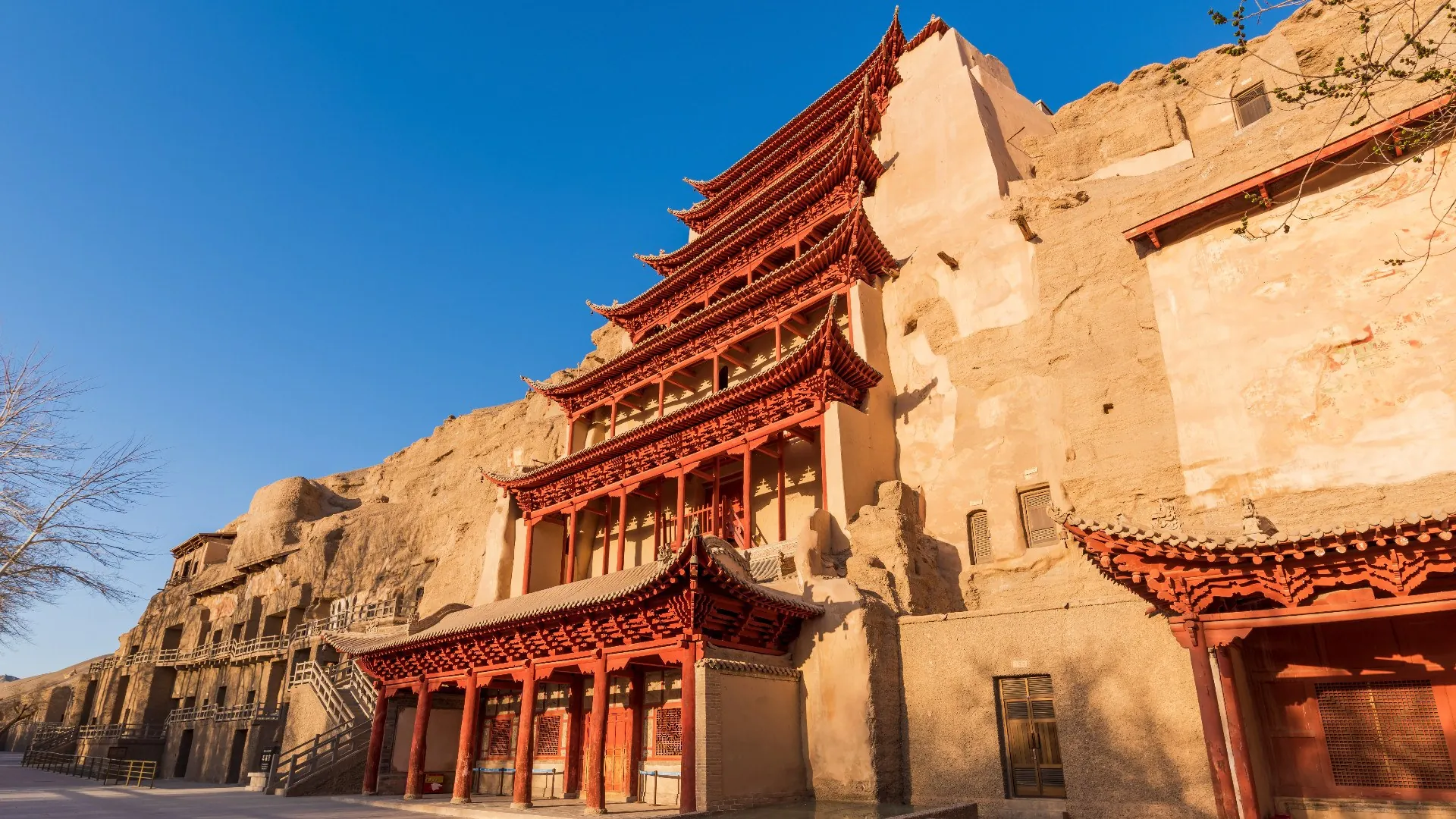
Mogao Caves
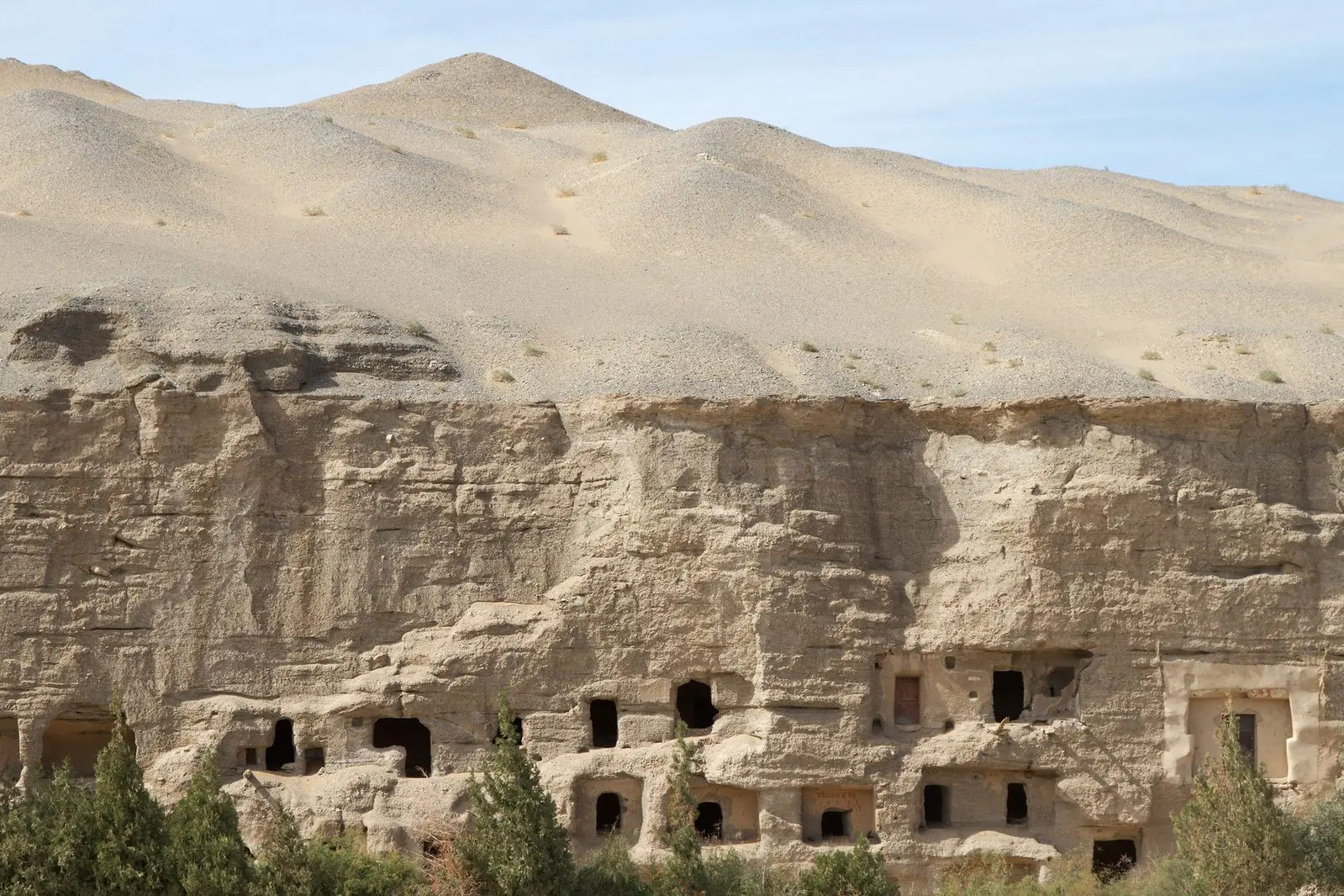
Nearly 500 caves carved into a cliff face between the 4th and 14th centuries, layer upon layer of Buddhist murals and painted statues. Visitor numbers are capped and every visit is guided — we book the timed tickets well ahead, because in busy months they sell out days in advance.
Mingsha Shan — the Singing Sand Dunes
Golden dunes rising up to 300 metres at the edge of town. Go late in the afternoon: camel treks and sand sledding as the light turns, then stay for sunset when the ridges glow. The dunes are said to "sing" as sand slides down their faces.
Crescent Lake (Yueyaquan)
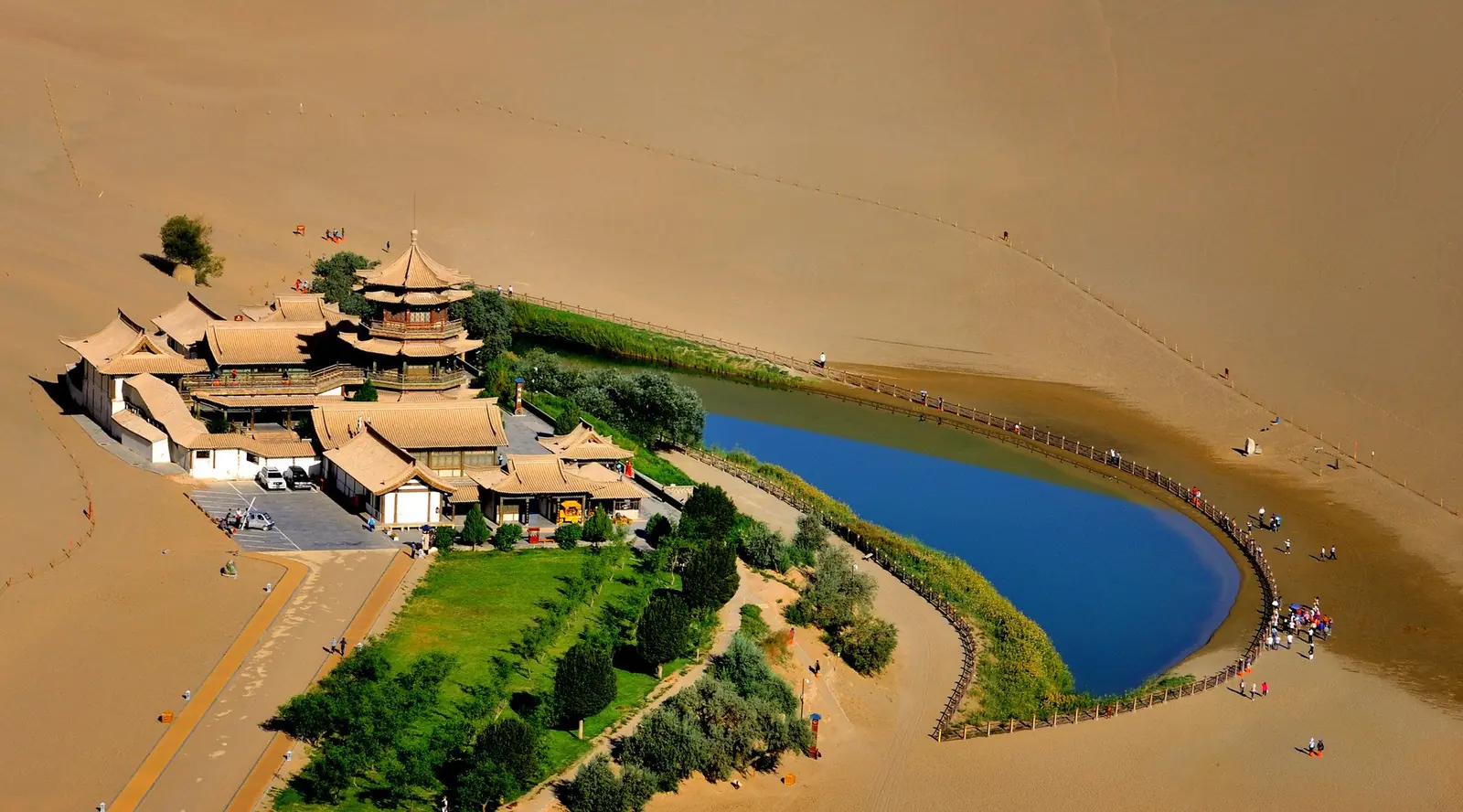
Tucked into a hollow in those same dunes, a crescent-shaped spring with a small temple on its shore. It has sat there, surrounded by sand on all sides, for some two thousand years without being swallowed or drying out.
Further along the corridor
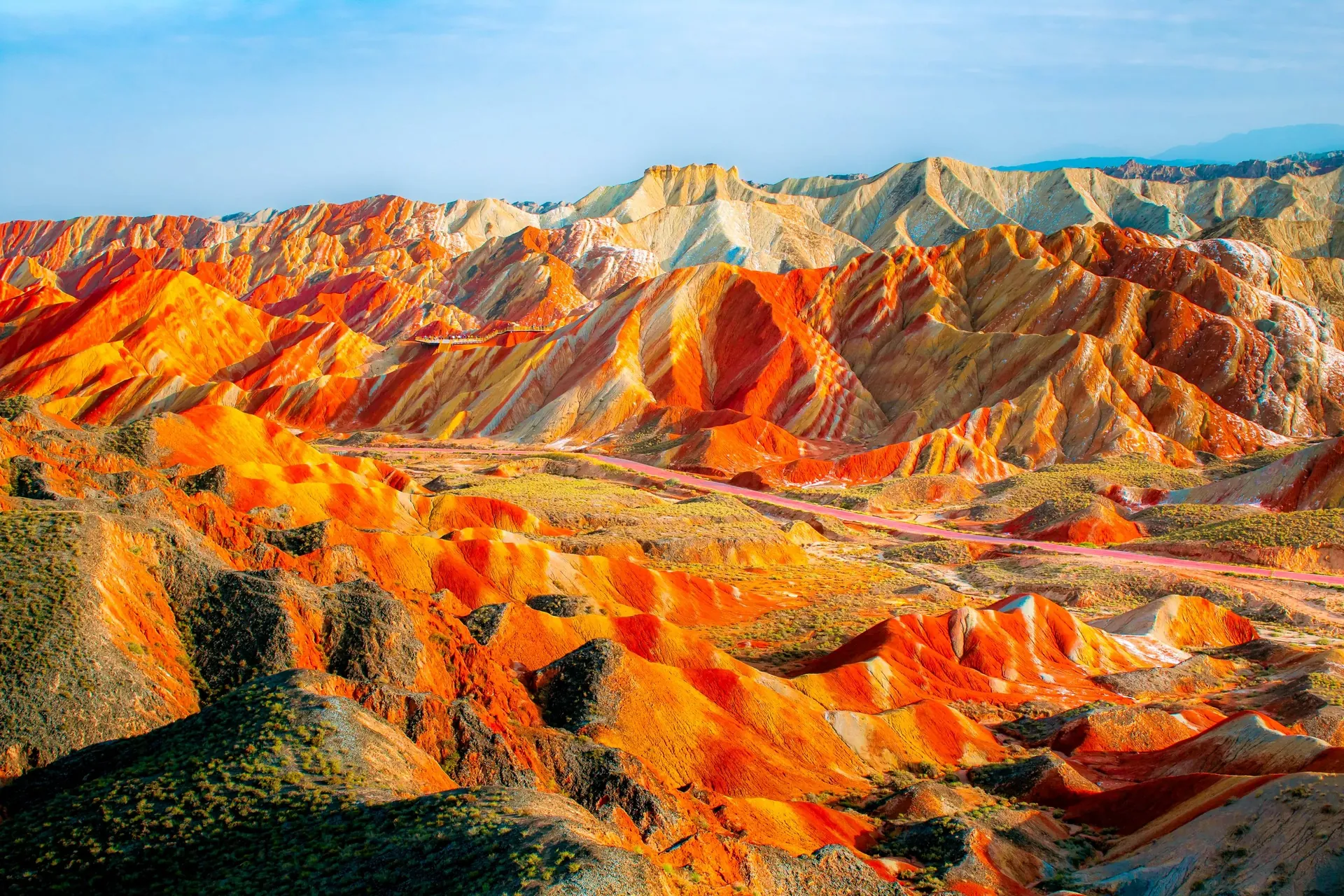
With more days, the Hexi Corridor strings together like beads: the rainbow-striped Danxia hills at Zhangye, Jiayuguan Fort where the Ming Great Wall ends in the desert, and Lanzhou's Yellow River and hand-pulled noodles at the corridor's eastern end.
Sample itinerary — 4 days in Gansu & Dunhuang
This is a sample itinerary, so you can see what each day actually looks like — the scenery, the meals and where you sleep. On a private trip the order and pace are adjusted to your dates; your confirmed day-by-day plan, with named hotels, comes with your quote.
- Day 1
Arrive in Dunhuang
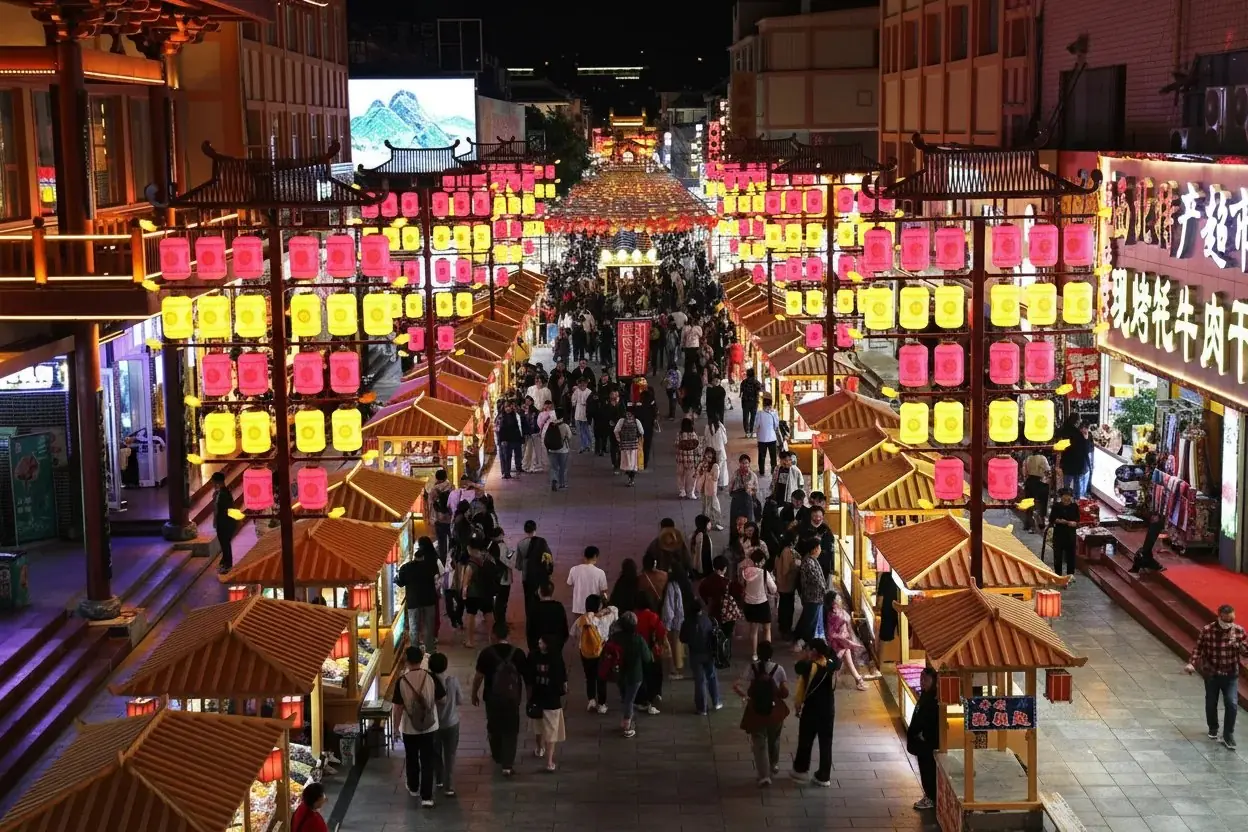
Fly or train into the oasis town and feel the desert at the edge of the streets. A gentle first evening at the Shazhou night market: donkey-meat noodles, lamb skewers, flatbreads and apricot juice — and an early night, because the caves start early.
- Day 2
The Mogao Caves
The thousand-year art gallery in the cliff: the digital exhibition centre first for context, then a timed, guided run through the caves themselves — layer upon layer of Buddhist murals and painted statues from the 4th to the 14th century, under the nine-storey building that guards the giant Buddha. Numbers are capped and tickets booked well ahead; that's handled for you.
- Day 3
Mingsha Shan dunes & Crescent Lake
A free morning — museum, market, sleep — then out to the dunes in the late afternoon, when the light and the temperature are right: camel trek, sand sledding, and sunset from a ridge 300 metres up. In the hollow below sits Crescent Lake, a spring that has held its crescent shape in the sand for some two thousand years.
- Day 4
Down the Hexi Corridor — Zhangye's Danxia hills
Head east by train along the corridor the caravans used (about 700 km), to the rainbow-striped Danxia hills at Zhangye — banded red, orange and gold ridges that look painted. Onward by train or flight from Zhangye or Lanzhou, or stay on the corridor for Jiayuguan, where the Ming Great Wall ends in the desert.
How many days?
Three to four days covers Dunhuang properly: one for the Mogao Caves, one for the dunes and Crescent Lake (with the Western Thousand Buddha Caves or the Yumen Pass ruins if you're keen), and breathing room around them. The full corridor — Lanzhou, Zhangye, Jiayuguan, Dunhuang — takes about five days and is one of China's great overland journeys. It's the middle section of our 21-Day Silk Road & Grand China and 30-Day One Month in China routes, or it can be added to a shorter custom trip via the inquiry form or WhatsApp. It pairs naturally with Xi'an, the Silk Road's eastern starting point.
Getting there & around
Dunhuang has its own airport with flights from Xi'an, Lanzhou and (seasonally) Beijing, and a railway station — Lanzhou to Dunhuang takes about 7.5–8.5 hours by fast train, or about 12 hours by overnight sleeper; a direct flight is about 2 hours. Inside Gansu the distances are desert distances, so the corridor trip works best town by town, by train or car. We sort the connections when we quote, since schedules change with the season.
Best time to visit
May–June and September–October: warm days, cool nights, clear desert light. High summer is genuinely hot at midday — do the dunes at dawn or dusk and it stops mattering. Winter is cold but the caves are nearly empty. Avoid the first week of October if you can; Mogao tickets are the first thing in Gansu to sell out.
What to eat
Dunhuang runs on wheat and lamb: donkey-meat noodles (huangmian) with a tangy sauce, lamb skewers and flatbreads at the Shazhou night market, apricot juice everywhere, and sweet Li Guang apricots in season. Lanzhou, if you pass through, is where China's most famous bowl of beef noodles comes from — breakfast, by local rules.
Gansu & Dunhuang FAQ
Do the Mogao Caves need booking in advance?
Yes. Entry is by timed, guided ticket with a daily cap, and in May, summer and early October they can sell out several days ahead. Tell us your dates early and the tickets are reserved as part of the plan — this is the one sight in China where turning up on the day genuinely doesn't work.
Is the desert too hot / too much for kids?
Timed right, no. Dunes at opening or in the last hours of light are comfortable most of the year, and kids tend to rate the camel ride and sand sledding above everything else on the trip. Midday in July and August is the exception — that's cave and museum time.
Can I combine Dunhuang with Xi'an?
It's the classic pairing — Xi'an is where the Silk Road caravans set out, Dunhuang is where they reached the desert. There are direct flights and trains between them, so a Xi'an + Gansu trip of 6–8 days hangs together very well. Ask us to stitch it via the inquiry form.